Embracing the Complexity of Community: Expanding my Horizon.
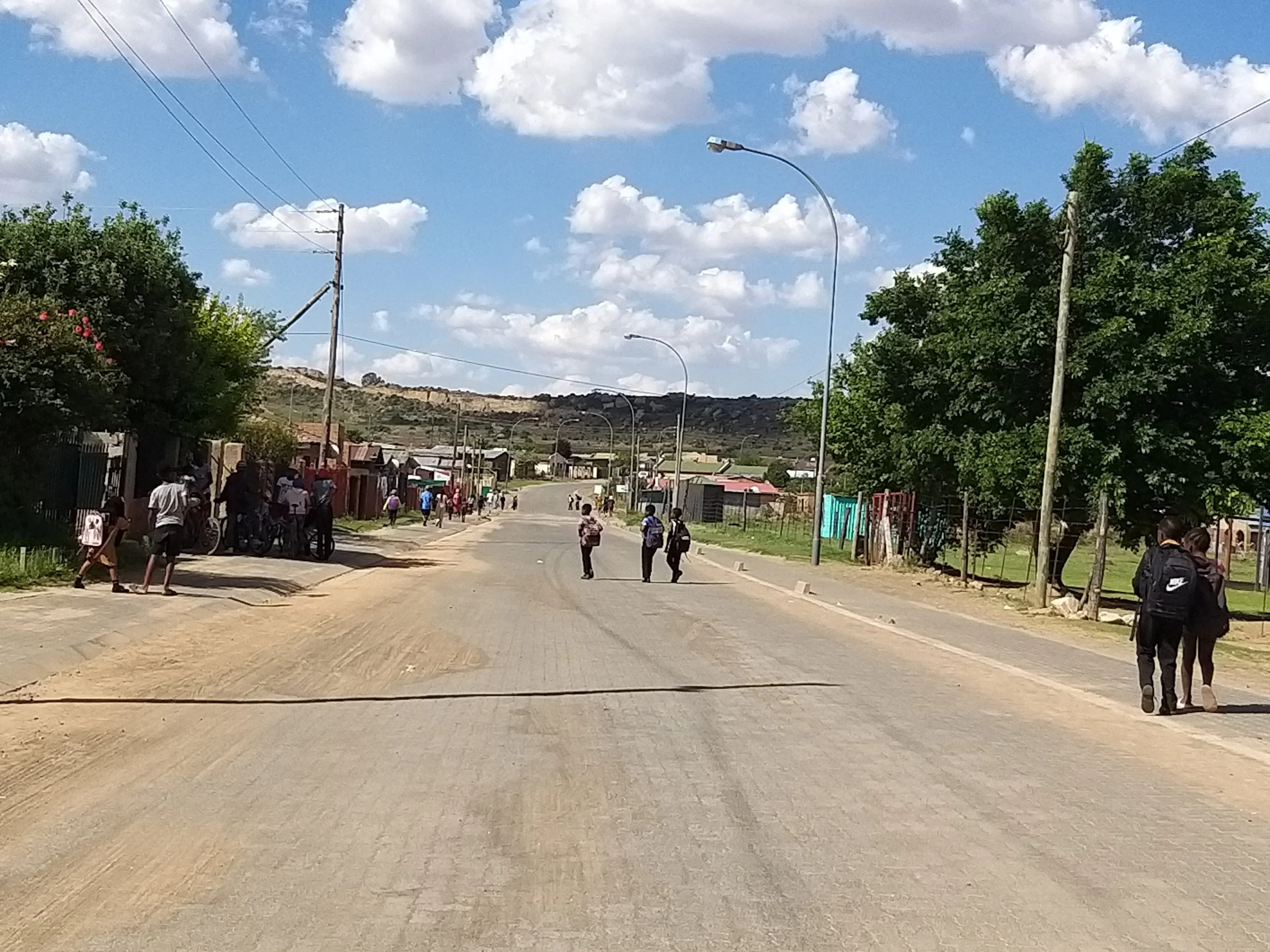
picture credit: Anneen Maree | Bloemfontein township
Recently, I found myself in a series of conversations that appeared, at first, to have very little in common. One moved through questions of family responsibility. Another touched on culture and belief. Others turned towards livelihoods, land, emotion and the environments in which people build their daily lives. Yet, the longer I listened, the more difficult it became to separate one conversation from another, one subject from the other.
A conversation about economic opportunity could not be separated from the responsibility of caring for a family. A discussion about development could not be removed from culture, history or place. Questions about how people live were closely connected to the land, water and natural systems surrounding them. Even the decisions that seemed individual were shaped by relationships, expectations and circumstances extending far beyond one person.
Although the conversations began in different places, they kept leading me towards the same realisation: nothing within a community exists entirely on its own.
We often speak about communities as though they are clearly defined groups of people who happen to live in the same place or share a particular interest. From a distance, a community can appear relatively simple. It may be described by its geographic boundaries, population, language, economic conditions or shared identity. These descriptions are useful, but they reveal only part of the picture. Beneath these descriptions lies a far more intricate network.
A community is formed through relationships, memories, responsibilities, customs, livelihoods, disagreements, hopes and compromises. It is influenced by the physical environment in which people live, but also by histories that may no longer be immediately visible. Decisions made in one part of the community can create effects elsewhere, sometimes in ways that cannot be predicted at the outset. This is why communities are perhaps better understood as living ecosystems than perceived as fixed structures. Their different parts are connected, but not always in ways obvious to the outside eye. Some relationships are visible and easily explained. Others operate quietly beneath the surface, only becoming apparent when something changes or disrupts the balance.
The more I reflected on these conversations, the more I began to question how confidently and frequently we use the word “community”. We speak about serving communities, developing communities, empowering communities and building community economies. Yet, before any of this can be done meaningfully, we must ask a more fundamental question: What do we actually mean when we speak of a community?
A mentor of mine once told me, “You only truly understand something when you can define it.”
I have returned to those words many times. In an age where information and definitions are readily available, it is tempting to believe that naming something means we understand it. However, definitions can also create distance. A general definition may help us classify a community, but it may fail to explain how that specific community understands itself.
The challenge is not that communities cannot be defined. It is that they cannot be understood fully through definitions imposed from outside. Every community has been shaped by a particular combination of people, place, history, environment, attraction and necessity. Its needs may resemble those of another community, but the relationships between those needs will not necessarily be the same. Its challenges may be familiar, but the reasons behind them and the ways people respond to them, will always be rooted in a specific context. This is where the complexity of community begins to matter.
It matters because the way we understand a community influences the way we act within it. When a community is viewed primarily as a problem focusing on unemployment, poverty, food insecurity, waste, crime or inadequate infrastructure; it becomes tempting to design a solution around that problem alone.
The problem may be real. The proposed solution may be practical, innovative and well intentioned. Yet, if the wider relationships surrounding the problem are not understood, an intervention may create consequences far beyond those it was designed to address. This does not necessarily happen because those involved do not care. In fact, it is quite the opposite. Often, it happens precisely because people are eager to help. A visible need creates urgency, and urgency encourages action. But action taken before a community has been deeply understood can mistake what is most visible for what is most important.
One example has remained with me because of how clearly it illustrates this. A project was developed in a community where formal waste-management systems were limited. The proposal appeared to respond to several challenges at once. Used nappies would be collected and repurposed as part of a process for growing mushrooms. Mothers would receive a small payment in exchange for the used nappies, creating an incentive for collection while also contributing to waste reduction and economic activity. On paper, the idea seemed imaginative. It connected environmental management, livelihood support and local participation. It appeared to turn something regarded as waste into something potentially useful.
Yet the intervention also created an incentive that had not been fully anticipated. Once used nappies acquired monetary value, they became something worth obtaining. Reports emerged of nappies being stolen from homes. The intended outcome and the actual outcome were not the same. The project had entered a living system. By changing the value of one item within that system, it had also changed people’s behaviour around it. A solution designed to address waste and create income affected household security, trust and relationships within the community.
This is the difficulty of working with complexity. An intervention does not remain neatly contained within the boundaries of the problem it was created to solve. Like a drop falling into water, it creates movement. The first ripple may be visible and expected, but it meets other ripples already in motion like family pressures, economic hardship, social relationships, cultural expectations, existing forms of exchange and the everyday decisions people make to survive.
The effects move outward. Some may strengthen the community. Others may place strain on relationships that were not considered during the planning process. Often, the most significant consequences emerge in places that initially appeared unrelated to the intervention itself. This does not mean that communities should be left untouched or that development initiatives will inevitably fail. It means that good intentions and technical knowledge are not enough on their own. Before asking how a solution can be introduced, we must first ask what it will enter.
The question cannot always be answered from outside the community. It requires listening to the people whose lives are shaped by the conditions the initiative hopes to change. It requires attention not only to what people say they need, but also to the routines, responsibilities, relationships and informal systems through which daily life already functions.
This is why community development cannot be approached as a production line. A production line assumes that a particular input, applied through a controlled process, will produce a predictable result. Communities do not work this way. The same intervention introduced in two seemingly similar places may lead to entirely different outcomes because the relationships, histories and pressures within those communities are different.
Communities respond. They adapt. They interpret. They resist, reshape and sometimes repurpose what is introduced. This is not evidence that communities are irrational or difficult to manage. It is evidence that they are alive. Which makes me think that if communities are living ecosystems, then meaningful development must begin differently.
It must begin with the recognition that a community is not an empty space waiting for a solution. Long before an organisation, programme or development practitioner arrives, people have already been responding to their circumstances. They have formed relationships, shared resources, created informal systems of support, negotiated responsibilities and developed ways of surviving challenges that may have persisted for generations. These systems may not always be visible. They may not appear in formal reports, economic data or project plans. Some even may be imperfect, strained or exclusionary. Yet they have remained part of the reality into which any new intervention will enter.
A grounded approach therefore begins by paying attention to what is already present. It asks how people understand their own community before deciding how the community should be defined. It looks beyond visible needs to the relationships surrounding those needs. It recognises local knowledge not as an optional contribution to a pre-designed plan, but as an essential part of understanding the system itself. This requires more than consultation.
Consultation can easily become a process through which people are invited to respond to questions that have already been decided. Their answers may be recorded, summarised and included in a report, while the underlying direction of the project remains unchanged.
Listening is different. Listening requires a willingness to be changed by what is heard. It means allowing local experiences to challenge the assumptions on which an initiative was built. It means accepting that the problem identified from outside may not be the problem people experience most urgently or that the visible problem may be connected to a deeper set of pressures.
It also requires humility. Those working in community development often carry valuable knowledge, technical expertise and access to resources. These contributions matter. But expertise does not provide complete understanding. A person may know how to design a business model, establish a cooperative, measure economic activity or manage a development programme, while still knowing very little about the relationships that determine whether those tools will be accepted, adapted or resisted within a particular community.
Humility, therefore, does not mean abandoning expertise entirely. It means understanding its limits. It means entering a community with knowledge, but without assuming that knowledge is sufficient. It means remaining curious for longer than what may feel comfortable or necessary. It means asking not only, “What can we introduce here?” or “What is already working here?” but also, “How are you today?”
This changes the role of development. Rather than attempting to manufacture change from the outside, development becomes a process of working with the strengths, tensions, knowledge and relationships already present within a community. The aim should never be to control every outcome. In a living ecosystem, that would be impossible. The aim is to understand enough of the system to act responsibly within it and to remain attentive to what changes once action begins.
This is where the idea of balance also changes. Balance within a community does not mean stillness. It does not mean that conflict, hardship or change have disappeared. Communities are constantly moving. Relationships strengthen and weaken. Resources become available and scarce. People arrive, leave, adapt and take on new responsibilities. Successes and difficulties often exist at the same time.
Perhaps community balance is better understood through the image of water disturbed by a falling drop. The drop creates ripples. Each ripple rises and falls before meeting others already moving across the surface. The water does not return immediately to stillness, nor does every wave move in the same direction. Yet within this movement, a new pattern begins to form.
Development initiatives create similar movement. Even a small intervention may affect livelihoods, responsibilities, relationships and expectations beyond its original purpose. The question is therefore not whether an initiative will create ripples. Undoubtedly, it will. The more important question is whether those involved are willing to watch where the ripples travel, learn from what they disturb and adjust when the effects are not what they expected. This understanding asks us to move away from rigid measures of success.
External indicators are often necessary. Projects must be planned, monitored and evaluated. Resources must be accounted for, and outcomes must be assessed. But measurements become dangerous when they are treated as more important than the lived reality they are meant to describe. A project may meet its targets and yet, it still weakens trust. An initiative may create employment while placing new burdens on families. Programmes may introduce a useful service while displacing an informal system on which people depended. Regardless of the approach and while many may appear successful from the outside. Often consequences are created that are only visible to those living within the community.
For this reason, communities must have a meaningful role in defining what progress looks like. Their measures of success may include income, employment and business growth, but they may also include dignity, security, belonging, cooperation and the ability to care for one another. These outcomes are not secondary simply because they are more difficult to quantify. They are often what determines whether economic or social progress can be sustained.
While the conversations that first led me to reflect on these questions were not all about community development. To be honest, all were unrelated and not about development at all. Yet each revealed something about the way human lives are woven together. A decision about work was also a decision about family. A question about land was connected to memory, identity and survival. A discussion about opportunity could not be separated from responsibility. What appeared to be one issue was often part of a much larger story.
Perhaps that is what we risk forgetting when we speak too easily about “the community”. There is no single, uncomplicated entity waiting to be understood. There are people living within layers of relationship, history, place, attraction and necessity. There are visible structures and invisible ties. There are systems of care, conflict, exchange and belonging that cannot always be captured through a definition or explained from a distance.
To embrace the complexity of community is not to make development impossible. It is to make it more honest. It asks us to resist the urge to simplify people so that they fit our plans. It asks us to listen before defining, to understand before intervening and to remain present long enough to see the effects of what we introduce. Most importantly, it asks us to recognise that communities are not merely the recipients of development. They are already living, adapting and creating meaning within complex ecosystems of their own.
The work, then, is not to arrive with the answer. It is to enter with enough humility to discover what the question truly is.
Yours,
Anneen
from What Matters
#HumanityWhatMatters #RegenerativeEconomy