Insight #1: Context is Everything
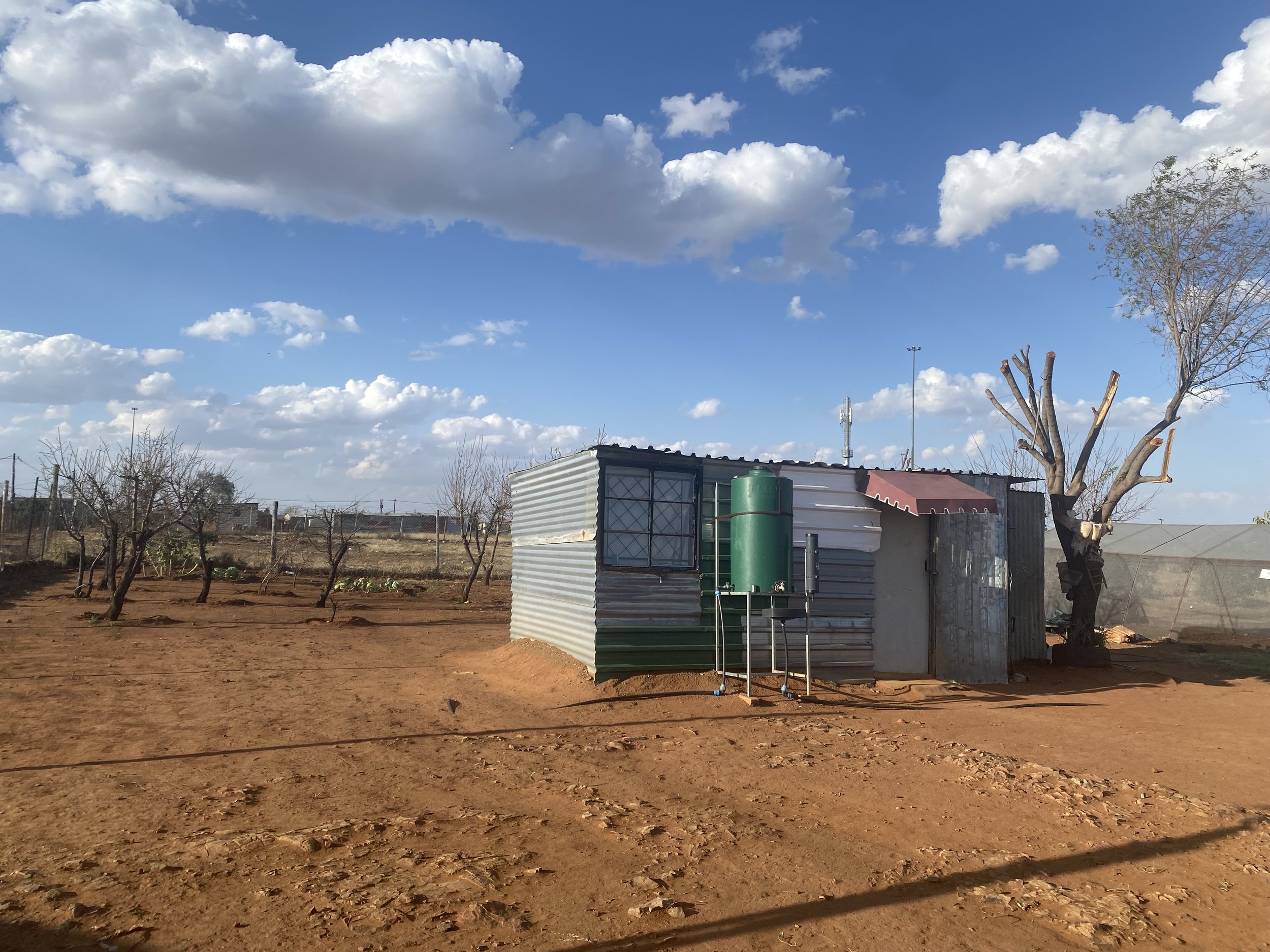
picture credit: Nicole Bastien | Bloemfontein township
Economic Development has long invested in strengthening individual entrepreneurs, businesses, and households. These efforts have improved individual outcomes many times over. But a question kept surfacing in our work: why don't those individual outcomes translate into stronger community prosperity? That question shaped more than a decade of work in townships and communities across South Africa, Kenya, and Lesotho, and it's what led us to Community Economy Development, as we call our approach focused not just on individual economic actors, but on the community economy they're part of.
What follows is the first of ten insights from that work, published as a series. It starts with the one everything else depends on.
Insight #1: Context is everything.
We didn't arrive at this insight by theorizing about it. It came from repetition of the same discovery, community after community. Every time, the economy we found on the ground looked nothing like the one we expected from the data.
The unemployment numbers said one thing. What we saw said another. People were trading, repairing, producing, transporting, providing services, meeting needs that no institution was tracking. The economic capability was already there, in every single community we entered. What varied completely from place to place was everything around that capability: the history, the relationships, the institutions, the resources, the constraints.
This is why we've stopped treating context as a preliminary step. A situational analysis or a baseline study can tell you what a community looks like on paper. It can't tell you how that community actually works. That only becomes visible through the work, community gatherings, conversations, and the slow process of watching people describe their own economy in their own terms. Understanding a community's economic dynamics isn't something you finish before development starts.
It is the development.
At our Community Economy Hub in Namibia Township, Bloemfontein, this understanding builds through open community gatherings, not surveys. People talk about what's missing, what's working, what they've tried before. Local knowledge, existing capability, and the gaps people actually experience surface through that conversation, not through a form filled out once and filed away. Some participants come back afterward with an idea for a business that could respond to something the community just named. That idea didn't arrive from a needs assessment. It arrived from context, done properly.
None of this moves in a straight line, and it shouldn't. Early assumptions get revised. A detail someone mentions in the third conversation reframes what we thought we understood after the first. That's not inefficiency. It's the process working as it should. A conclusion reached too quickly tends to be wrong in ways that don't show up until a project is already built on it, and unwinding that costs far more than taking the extra time up front.
It helps to think about why this can't be a shortcut. A farmer preparing land for planting doesn't look at soil alone. Rainfall matters. So does the timing of the seasons, the wind, the distance to water, and which pests are active that year. None of these conditions explains the harvest by itself. It's the interaction between all of them that decides what grows.
Community economies work in a similar way. No single factor explains how a place makes its living. Its history, leadership, or informal networks that never make it into a report are shaping factors as well. It's the interaction between all of these, specific to that community and no other, that determines what's economically possible there.
This is also why we've grown careful about carrying an approach from one community into the next. Two townships can post the same unemployment rate and still run on different economic logic underneath it. We've seen this directly: entrepreneurs in one community understand their customers, suppliers, and constraints in ways that simply don't transfer to a community twenty minutes away, let alone a different country. What works in Bloemfontein doesn't automatically work in Nairobi. Not because our methodology is wrong, but because unvalidated assumptions are sloppy solutions’ best friend.
So we don't start by asking what a community needs introduced. We start by finding out what's already there. And that search takes time we've learned not to rush.
Much of a community's economic capability stays lodged in individual experience. An entrepreneur knows her customers and suppliers, but that knowledge rarely travels beyond her immediate circle. When she leaves the community, the knowledge often leaves with her. Businesses operate near one another for years without recognizing they could collaborate. The relationships exist. They just haven't become a system yet.
The more precisely we understand a community's own economic dynamics, the more clearly these openings come into view. Not because we've added something new, but because what was already there becomes visible enough to connect. A conversation surfaces a challenge that several businesses had been carrying alone, each assuming it was theirs alone to solve. Two entrepreneurs discover they've been serving the same gap without knowing about each other. That knowledge starts moving between people instead of staying locked inside one.
None of this happens because we've finally cracked the context. It happens because the understanding keeps developing all the way through the work. There's no point where context gets set aside so the "real" development can start. They're the same activity, at different stages of the same conversation.
Context, in other words, isn't the setting for this work. It's the material we're working with every day. The next nine insights all build on this one, because none of them hold up without it: you can't strengthen what a community economy can become until you understand, specifically and patiently, what it already is.
About this series
This is the first insight in a ten-part series about our work of Community Economy Development in townships and communities across South Africa, Kenya, and Europe. Part of this series
The ten insights
#1 Context is everything.
#2 Patterns emerge naturally.
#3 Start small.
#4 Build relationships.
#5 Circulate value.
#6 Serve collective needs and innovation.
#7 Grow from within.
#8 Shared ownership.
#9 Learn and adapt.
#10 Trade-offs are real.
Nicole Bastien and Anneen Maree co-founded COLAB for Future Economics South Africa and initiated the Community Economy Hub in Namibia Township, Bloemfontein, where this work is researched and practiced. Get in touch at connect@humanitywhatmatters.com.